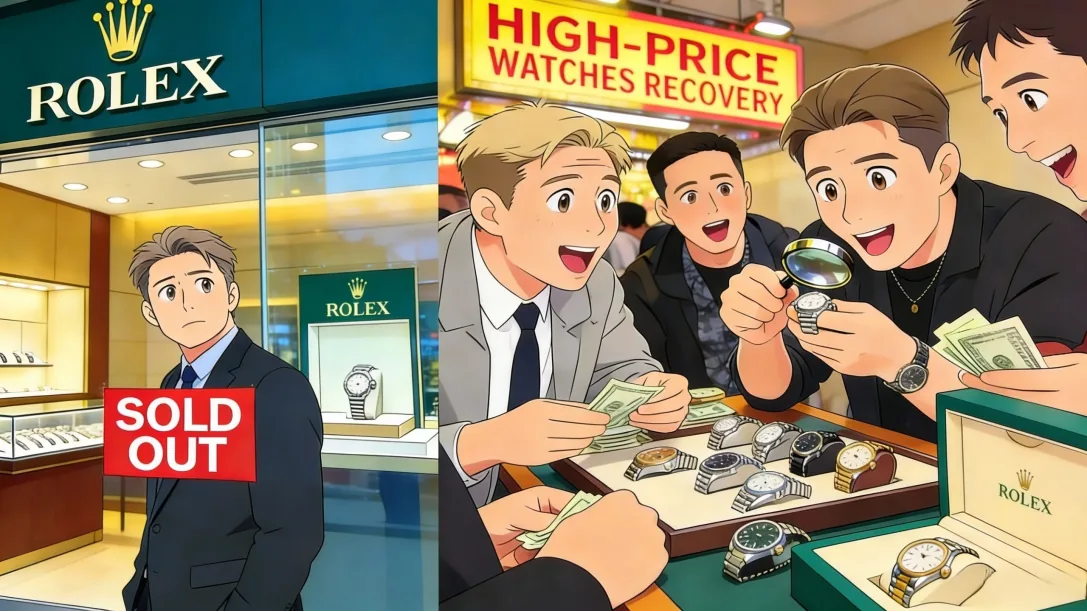
I. From Timekeeping Tools to “Wrist Assets”: The Disruption of Investment Logic
Rolex's explosive growth stems primarily from its transformation into an asset class in the United States. In a time of rising prices, Rolex watches are seen by the middle and upper classes as a reliable investment. This is because they are rare, can be easily sold, and are made to last. Professional models such as the Submariner and the Daytona, with their reliable mechanical performance and iconic design, have become an entry-level form of “alternative investment”. Wall Street analysts now track their price indices alongside gold and Bitcoin as barometers for “mass-market luxury assets.
II. The social code of the 'silent luxury' era: A subtle statement of identity
The increase in the popularity of pre-owned Rolex watches coincides with the current “quiet luxury” trend in America. Elite circles are moving away from flashy consumerism. A vintage Rolex Datejust or Explorer is a subtle symbol of taste and status. It is now seen on both East and West Coasts, from Silicon Valley to New York. This anxiety and desire for identity translation fuels robust purchasing power in the secondary market.
III. Systemic Scarcity and the Rise of “New Market Makers”: Power Shifts in the Supply Chain
Rolex's premium fundamentally stems from “systemic scarcity.” The brand strictly controls production and distribution, creating a routine of “no watches in boutiques,” forcing demand toward the secondary market. There's a parallel market between traditional brands, dealers, speculators, and consumers. Rolex's stance on scalping has made the market more speculative.