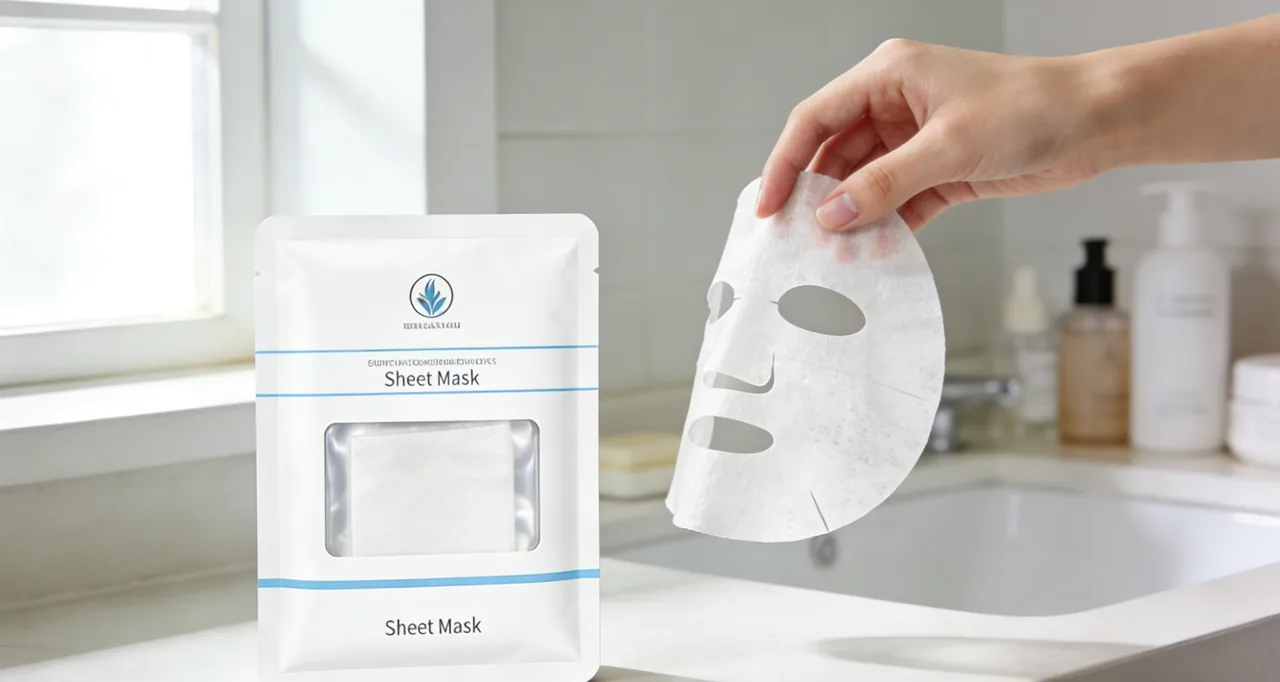
From Trend-Driven to Routine-Oriented
Five years ago, sheet masks were often marketed around immediacy and visual impact. Today, their renewed relevance reflects a broader shift in how U.S. consumers approach skincare. Industry observers note that sheet masks are now more frequently discussed as supportive products used alongside daily routines, rather than standalone treatments. Retail assortment patterns suggest that while masks remain a smaller category compared to core skincare staples such as serums and moisturizers, they have maintained consistent shelf space, especially in online retail. Their role has shifted from impulse purchases to targeted add-ons designed to complement existing regimens.
New Use Cases Focused on Recovery
A key factor behind the category’s repositioning is changing use behavior. Consumers are increasingly turning to sheet masks as part of recovery-focused routines — following exfoliation, active-ingredient use, or exposure to environmental stress such as travel This evolution mirrors growing interest in hydration and skin barrier support. Formulations emphasizing soothing ingredients, humectants, and minimal fragrance appear to align more closely with current expectations than earlier versions centered on novelty or dramatic short-term effects.
Implications for Retail and the Broader Market
The return of sheet masks does not signal a revival of the category’s previous hype-driven model. Instead, it points to a recalibration within the U.S. skincare market. Retailers are positioning masks alongside hydration and repair products, reinforcing their role as functional tools rather than trend accessories. From a broader industry perspective, the quiet reemergence of sheet masks reflects shifting consumer priorities toward consistency, education, and long-term maintenance. Products that clearly define their place within a routine — rather than promising transformative results — appear better positioned to remain relevant. In this context, sheet masks are not staging a comeback in the traditional sense. Their renewed presence reflects a more measured, purpose-driven role within modern American skincare habits.